👑 Full Stories
The whole story behind the royal headlines.
👑 Stories about Princess Kate
Show all
Thank heavens Meghan is back. She's not perfect but her return has proved she brings something to the Royal Family that's been missing in recent years - and the other royals should take notes: i
For all the sighing, eye-rolling and pearl-clutching that still follows Meghan wherever she goes, one thing has become harder to deny: when she is in the royal conversation, the whole institution suddenly feels more alive. Love her or loathe her, the Duchess of Sussex brings spark, jeopardy and a sense of modern possibility that has been missing from the family’s carefully managed public picture for years. That is why her return to the headlines has landed with such force. Not because everyone has forgiven the past, and certainly not because the old arguments have vanished, but because Meghan has always had a quality the monarchy struggles to manufacture on its own: she generates interest that feels global, emotional and current. For a family built on tradition, ritual and hierarchy, that matters more than courtiers may like to admit. The Royal Family has long relied on a delicate balance between continuity and charisma. The late Queen embodied duty so completely that she barely needed theatre. Diana, Princess of Wales, brought the electricity. Catherine has elegance. William projects steadiness. Anne offers grit. But Meghan introduced something else altogether: disruption with glamour. From the beginning, she represented a change of pace. Here was an American actress, divorced, outspoken and at ease in front of a camera, arriving in one of the world’s oldest institutions with a confidence that many royal women before her were never allowed to show. According to reports, that energy unsettled some parts of the palace machine almost immediately. To others, especially younger fans, it felt like fresh air. That is why this latest wave of Meghan fascination says so much. Even after the family rupture, the interviews, the recriminations and the years of frosty distance, she still cuts through in a way few working royals now do. A photograph, an appearance, a rumoured project or even a whisper of contact with Britain can dominate the royal agenda for days. And that points to an uncomfortable truth for the House of Windsor. For all its grandeur, it has looked increasingly cautious in recent years. The bench is thinner, the mood is more solemn and public engagements can sometimes feel worthy rather than compelling. There is respect, yes, but not always excitement. Meghan’s presence, even from afar, reminds everyone that the monarchy works best when it connects emotionally, not just ceremonially. Fans believe she understands the language of modern celebrity better than almost anyone in the royal orbit. She knows that visibility now is not simply about being seen on a balcony. It is about narrative, identity and making people feel they have a stake in the story. None of this means she is flawless. Far from it. Critics still argue that she and Harry helped deepen the family crisis and turned private grievances into a very public industry. Others think her style can look too polished, too Californian, too curated for a British institution that prefers understatement. Those complaints have not gone away. But perhaps that is precisely the point. Meghan evokes feeling. She provokes reaction. She forces the monarchy to confront questions it would often rather avoid: who is included, who gets protected, who gets blamed and what relevance really looks like in the 21st century. The other royals should be paying attention. Not because they need to copy her exactly, and certainly not because palace life can ever operate like a celebrity brand, but because she exposed a hunger for authenticity, emotional candour and a more contemporary kind of royal presence. Even those who disapprove of her methods cannot deny the scale of interest she commands. Insiders claim there is still deep caution around any idea of reconciliation, and few would expect a smooth reset any time soon. Yet the fascination around Meghan’s return to the wider royal narrative suggests something bigger than one duchess or one feud. It suggests the public is still searching for personality, warmth and unpredictability in a royal world that too often feels scripted. Perhaps that is Meghan’s strange royal gift. She does not make the monarchy feel comfortable. She makes it feel alive. And in an age when attention is everything, that may be more valuable than anyone inside the palace would care to admit. So, is Meghan exactly the jolt the Royal Family still needs, or has her return simply reopened old wounds that should have stayed buried?
16 Oct 2026
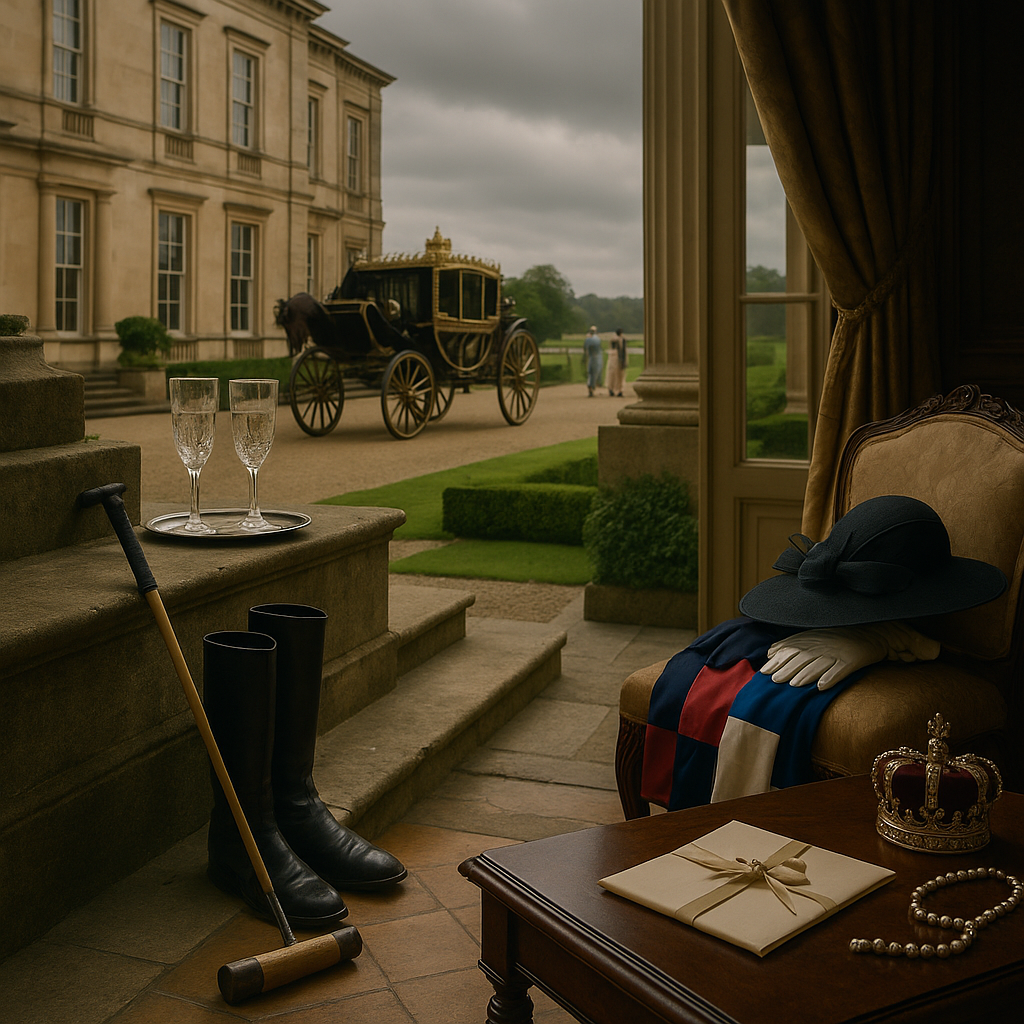
Inside 'pathetic' new strategy to make William and Kate less 'elitist': Less polo, no more champagne at Ascot... and why I fear Harry could take advantage: Royal sources reveal plans to RICHARD EDEN
There is nothing the Palace fears more than the E-word: elitist. And according to reports, that is exactly the image aides are now desperate to soften around the Prince and Princess of Wales, with a fresh strategy said to focus on stripping away some of the flashiest aristocratic signals that have long clung to royal life. Insiders claim the thinking is simple. Less polo. Less obvious upper-crust pageantry. Fewer moments that scream privilege at a time when households across Britain are watching every penny. And, in the sort of detail that instantly sets royal watchers talking, there is said to be sensitivity around the optics of champagne-soaked scenes at Ascot too. It is a striking shift, not least because William and Kate have often been seen as the monarchy’s safest bet: glamorous but disciplined, traditional yet relatable. Even so, reports suggest there is growing awareness behind the scenes that the couple can look a touch too polished, too country-house, too perfectly turned out for an age that prizes authenticity over inherited grandeur. That does not mean they are about to become anti-royal royals. Far from it. The crown still trades on mystique, ceremony and spectacle. But those close to the institution are said to believe there is a line between splendour and social distance, and that line may need redrawing if the Waleses are to remain firmly connected to a younger, broader Britain. Horse racing is a perfect example of the problem. It has deep royal roots and irresistible visual glamour, but it can also look like a members-only world of fascinators, hospitality tents and old-money codes. Queen Elizabeth adored it, of course, and followed bloodlines and form with a passion that surprised many who underestimated just how knowledgeable she was. Prince Philip, by contrast, was said to find it rather dull; though he accompanied the late Queen to race meetings, he was reportedly just as happy watching the cricket on television instead. That contrast says a great deal about royal survival. Even the most traditional family in Britain has always had to balance duty with personality, public image with private preference. The latest reports suggest William and Kate are trying to do the same, shaping an approach that looks less like a stately tableau and more like a modern family aware of the national mood. Yet there is an obvious risk. If they pull too far back from the classic royal pursuits, some loyalists may wonder what exactly is left of the old magic. Polo fields, racecourses and country rituals may not be universally loved, but they have long formed part of the texture of royal Britain. Remove too much, and the monarchy could start to look oddly cautious, even uncertain of itself. And then there is Harry. Because if William and Kate are indeed trying to appear less rarefied, fans believe the Duke of Sussex could seize on any wobble in the branding war. He has built much of his post-royal identity around attacking hierarchy, privilege and image management. If the Waleses are seen to be awkwardly sanding off their poshest edges, critics may ask whether Harry’s complaints have forced the institution into a defensive crouch. That would be deeply uncomfortable for the Palace, which would hate to give even the faint impression that it is reacting to Montecito rather than leading from Windsor. Still, royal history shows that perception matters as much as reality. A changed guest list here, a lower-key outing there, a little less fizz in public view, and suddenly a whole new narrative takes hold. For now, these remain reports and whispers rather than a formal blueprint. But they fit a broader pattern: a monarchy trying to stay majestic without seeming remote, privileged without appearing pampered, grand without drifting into parody. The real question is whether the public actually wants William and Kate to be less elitist, or whether a certain amount of royal glitter is precisely the point. Should the Waleses ditch the polo-and-champagne image, or would that only make the monarchy feel less special?
16 Oct 2026